10.2 About arc42
arc42, the Template for documentation of software and system architecture.
By Dr. Gernot Starke, Dr. Peter Hruschka and contributors.
Template Revision: 7.0 EN (based on asciidoc), January 2017
© We acknowledge that this document uses material from the arc 42 architecture template, https://arc42.org/. Created by Dr. Peter Hruschka & Dr. Gernot Starke.
Note
This version of the template contains some help and explanations. It is used for familiarization with arc42 and the understanding of the concepts. For documentation of your own system you use better the plain version.
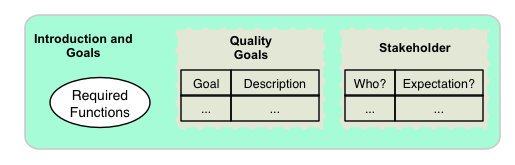
1. Introduction and Goals
Short description of the requirements, driving forces, extract (or abstract) of
requirements. Top three (max five) quality goals for the architecture which have
highest priority for the major stakeholders. A table of important stakeholders
with their expectation regarding architecture.
2. Architecture Constraints
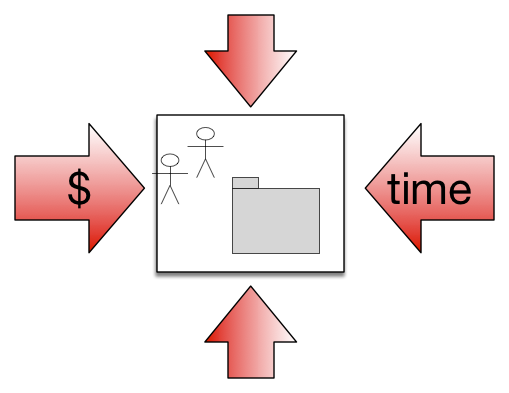
Anything that constrains teams in design and implementation decisions or
decision about related processes. Can sometimes go beyond individual systems and
are valid for whole organizations and companies.
3. Context and scope
Delimits your system from its (external) communication partners (neighboring
systems and users). Specifies the external interfaces. Shown from a
business/domain perspective (always) or a technical perspective (optional).

4. Solution Strategy
Summary of the fundamental decisions and solution strategies that shape the
architecture. Can include technology, top-level decomposition, approaches to
achieve top quality goals and relevant organizational decisions.

5. Building Block View
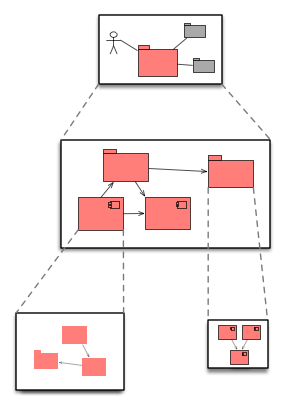
Static decomposition of the system, abstractions of source-code, shown as
hierarchy of glass boxes (containing black boxes), up to the appropriate level
of detail.
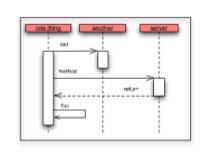
6. Runtime View
Behavior of building blocks as scenarios, covering important use cases or
features, interactions at critical external interfaces, operation and
administration plus error and exception behavior.
7. Deployment View
Technical infrastructure with environments, computers, processors, topologies.
Mapping of (software) building blocks to infrastructure elements.

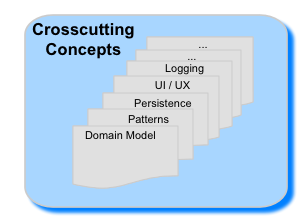
8. Crosscutting Concepts
Overall, principal regulations and solution approaches relevant in multiple
parts (→ cross-cutting) of the system. Concepts are often related to multiple
building blocks. Include different topics like domain models, architectur
patterns and -styles, rules for using specific technology and inmplementation
rules.
9. Architecture Decisions
Important, expensive, critical, large scale or risky architecture decisions
including rationals.

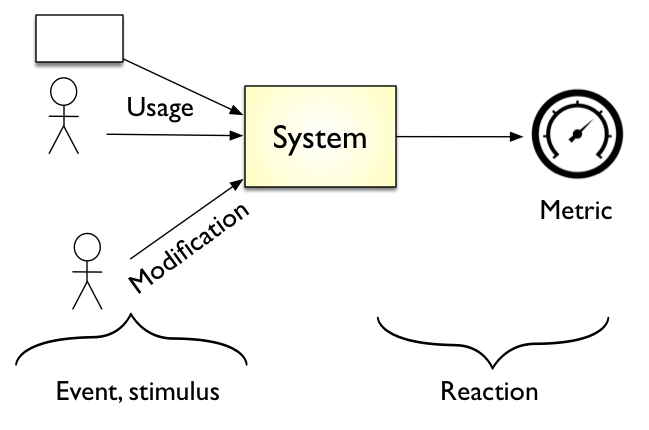
10. Quality Requirements
Quality requirements as scenarios, with quality tree to provide high-level
overview. The most important quality goals should have been described in section
1.2. (quality goals).
11. Risks and Technical Debt
Known technical risks or technical debt. What potential problems exist within or
around the system? What does the development team feel miserable about?

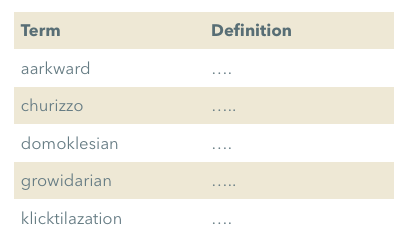
12. Glossary
Important domain and technical terms that stakeholders use when discussing he
system. Also: translation reference if you work in a multi-language
environment.